Production applications

IPG Photonics Laser Welding Across Industrial Constraints

Applications are grouped by what the joint must protect or prove. These examples frame the engineering questions; they do not claim a validated result for an untested part.

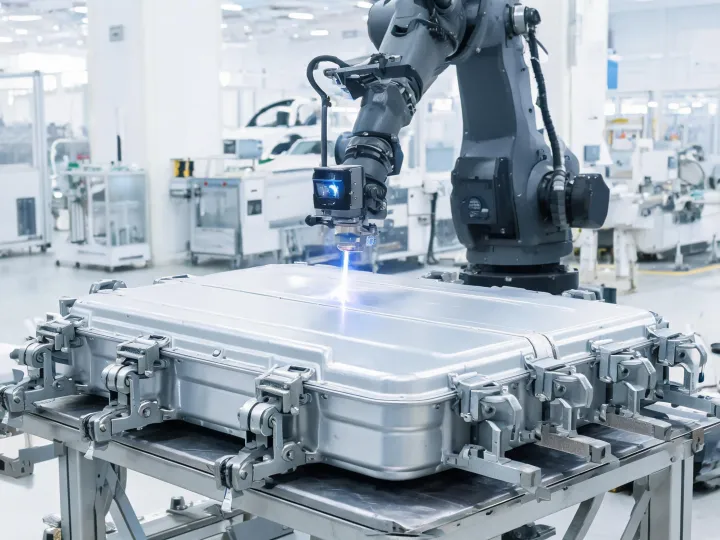
Laser welding an EV battery enclosure seam
Battery manufacturing

Seal integrity beside sensitive components

Cell and pack assemblies can combine reflective metals, thin sections and strict thermal budgets. Development work must examine gap sensitivity, plume and spatter management, shielding, electrical isolation and the effect of heat on nearby interfaces. A promising surface appearance is insufficient; the inspection plan should address the functional failure mode, whether that is leakage, electrical resistance or structural continuity.
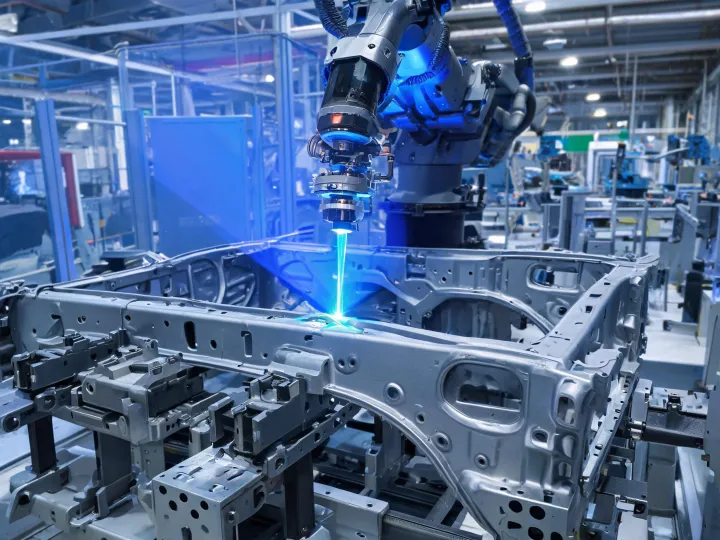
Automated laser welding of an automotive body component
Mobility structures

Takt time with fit-up variation

High-volume assemblies reward fast travel and non-contact energy delivery, but upstream dimensional variation still determines whether the beam intersects the intended joint. Seam tracking, fixture datum strategy, scanner field, robot reach and recipe control have to be evaluated as one system. The preferred architecture depends on path complexity, component mix and how the line will react when gap or position moves outside the qualified window.

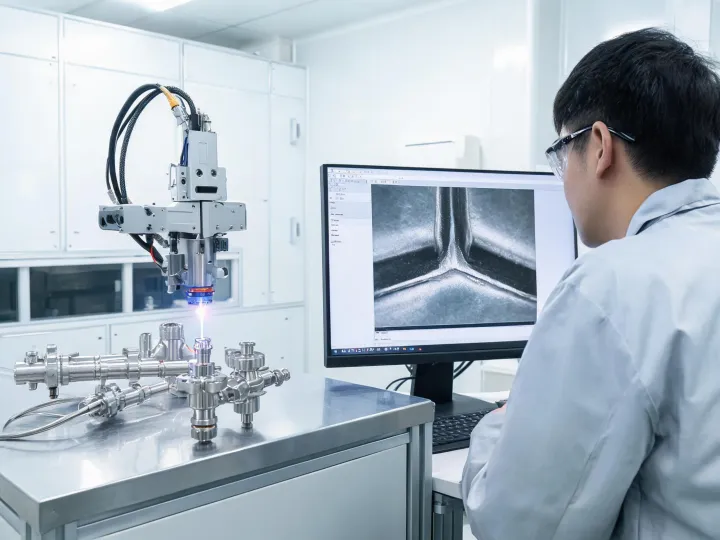
Precision laser welding of a stainless aerospace assembly
Aerospace and precision assemblies

Traceable procedures for critical joints

Parts with demanding documentation need more than a transferable recipe. Material heat, lot condition, cleanliness, joint preparation, fixture repeatability and calibrated measurement methods must be linked to the record. Qualification depth should follow the consequence of failure and the governing customer or regulatory requirements. Where destructive inspection is limited, monitoring can add process evidence, but it does not automatically replace required inspection.

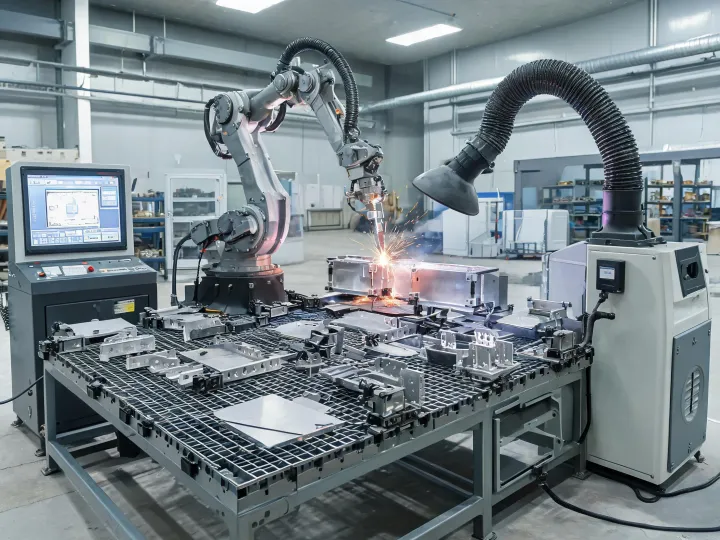
Flexible laser welding cell for mixed fabrication parts
Precision fabrication

Changeover without losing the window

Mixed production favors flexible tooling and recipe management, yet short runs may not justify elaborate automation for every family. Buyers should compare a robot, gantry or handheld architecture against seam access, operator skill, guarding, extraction and inspection effort. Laser welding can reduce heat input on suitable joints; it cannot compensate for uncontrolled fit-up, contaminated surfaces or a part design that blocks consistent beam access.

Method trade-offs

Match the process to the joint—not the trend

Fiber-laser welding offers concentrated energy, fast travel and automation potential. Arc processes may tolerate wider gaps or be easier to deploy for large open structures. Resistance welding remains efficient for suitable lap joints and established high-volume lines. The decision should compare joint preparation, access, consumables, heat input, fixture precision, inspection burden, operator exposure and lifecycle maintenance.

Selection factorLaser routeAlternative route may fit when
Fit-upControlled edge or lap geometry supports a narrow process windowWide or variable gaps are intrinsic to the assembly
AccessClear optical line of sight can be maintainedDeep recesses or field repairs limit beam delivery
ThroughputFast, repeatable automated seams justify integration effortLow volume makes a simpler manual process more economical
VerificationMonitoring and traceability can be tied to qualified criteriaExisting procedure approvals favor another process

Test the difficult joint first

Choose the worst credible gap, coating condition or access angle for the initial review. A boundary sample teaches more than an ideal showcase part.